
Leave A Message
If you are interested in our products and want to know more details,please leave a message here,we will reply you as soon as we can.

Why a higher price doesn't always mean more stopping power
There's a special kind of satisfaction that comes with adding a shiny, high-end brake system to your bike—responsive brake levers, beautifully styled calipers, and gleaming titanium screws.In theory, the advantages are obvious: lighter, stronger, more stopping power, and better handling.But the reality is – most riders can get great braking performance without spending a fortune.With some clever upgrades—better pads, quality rotors, and careful tuning—lower and mid-priced brake systems can perform almost as well as top-tier brakes.In many cases, they may even be the smarter choice.
Why quality brakes are important
A quality brake system gives you better control, allowing you to ride faster and safer.Whether you're competing competitively or taking a night ride in the local woods, a good brake system will make you a more confident, smoother and safer rider.The ability to brake smoothly into corners, reduce speed with precision, maintain grip and avoid the nervousness of a tight grip on the handlebars all comes from confidence in your braking system.The best brake systems not only slow you down, they also allow you to ride more aggressively and control more easily.And this level of performance doesn’t cost a fortune.In fact, the gap between mid-range and high-end braking systems is much smaller than the marketing suggests.
The knowledge of slowing down
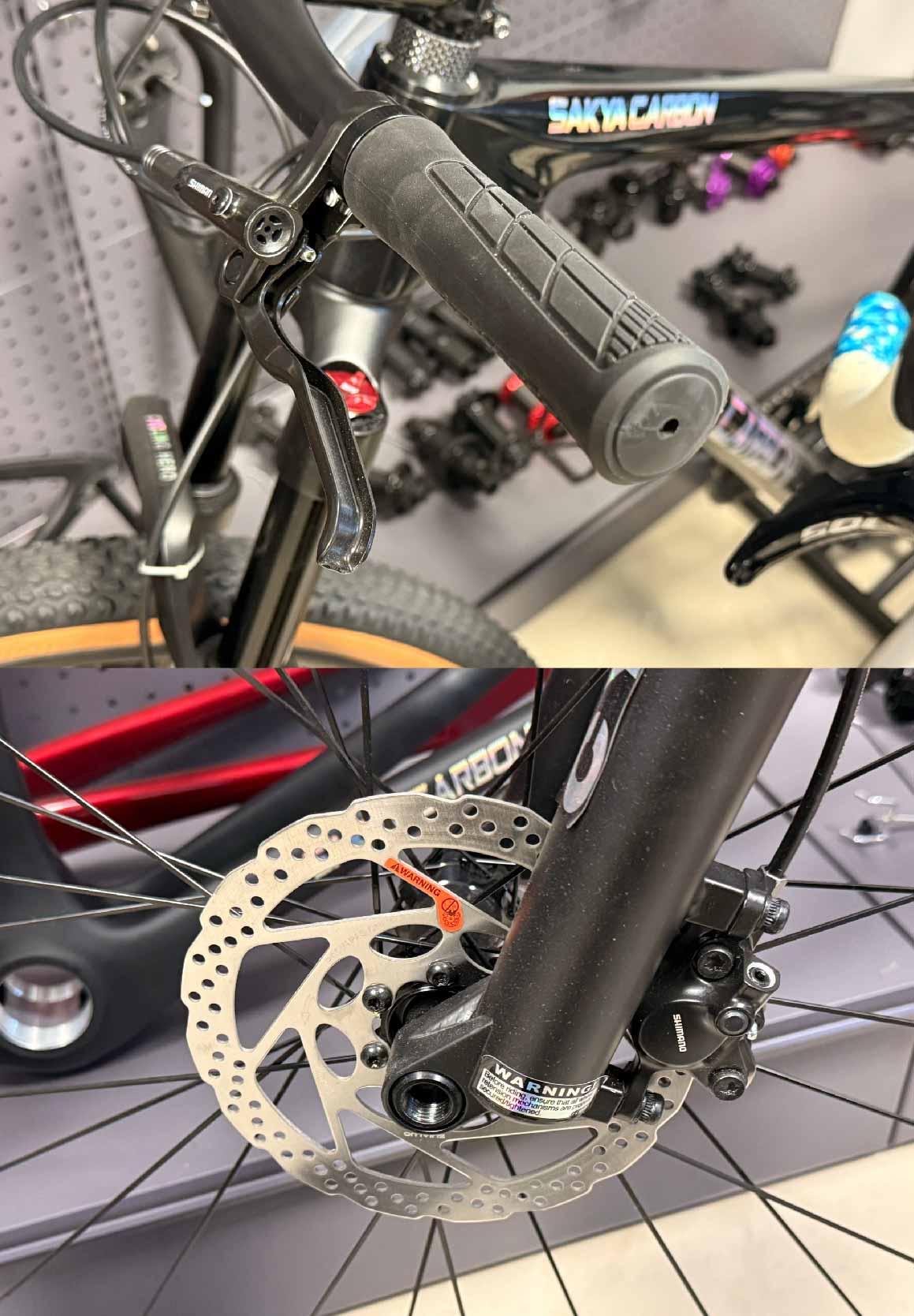
After years of testing everything from budget brakes to high-end systems, one thing is clear: price does not directly equate to performance. Braking force comes from the degree to which hand force is effectively amplified and applied to the brake disc through the hydraulic system.When you pull the brake lever, a small piston in the brake master cylinder creates hydraulic pressure that pushes a larger piston in the caliper.The ratio of the lever piston size to the caliper piston area - known as the hydraulic transmission ratio - determines the amount of force transmitted to the brake pads.A smaller handle piston will produce more hydraulic and braking force, but the handle travel will be longer.A larger piston creates less pressure and braking force, but makes the handle feel tighter and have a shorter stroke.Caliper size and number of pistons have the greatest impact: more or larger pistons produce greater clamping force.This pressure pushes the brake pads against the disc, and the disc diameter and pad friction convert this pressure into usable braking torque.Larger discs and stronger pads mean more stopping power and better heat control.The handle design increases the mechanical transmission ratio, which can fine-tune the way the braking force is improved during the braking process.We call this modulation.At the same time, the stiffness of the handle, hose and caliper ensures that pressure is not lost through deformation.Simply put, braking force is equal to hydraulic transmission ratio plus brake disc size plus brake pad friction, and is optimized by handle mechanics and system stiffness.
Summary thoughts
Good brakes aren't about brand prestige; they're about handling, confidence, and stability. Through riding and testing, I've found that wise upgrades and proper tuning are far more important than price. Before you spend a fortune on new brakes, first upgrade your brake pads, brake rotors, and brake fluid, and take the time to clean and tune them properly. You'll be amazed at how much your existing brake system can improve in terms of braking power, stability, and handling after upgrades and tuning. Remember, when you rush into steep, root-covered trails in dark or wet conditions, the brand logo on your brake levers won't stop you — what really works is the tuning of your brake system.




Leave A Message
Scan to Wechat :

Scan to WhatsApp :

 IPv6 network supported