
Leave A Message
Leave A Message
If you are interested in our products and want to know more details,please leave a message here,we will reply you as soon as we can.
submit

News

Home News

Differences & Application Scenarios of Tubular, Clincher and Tubeless Tires

Differences & Application Scenarios of Tubular, Clincher and Tubeless Tires

May 22, 2026

Differences & Application Scenarios of Tubular, Clincher and Tubeless Tires

The cycling industry sees rapid technical upgrades. Tubeless tires have achieved substantial market penetration this year. Professional teams in the Tour de France mostly adopt 30-32mm wide tires. As the only part contacting the ground, tires directly determine riding speed, safety and comfort. This article analyzes the distinctions and suitable usage of three mainstream tire types combined with industry trends and pro racing facts.
Tubular Tire

  • Structure: Integrated sealed casing glued onto dedicated rims
  • Advantages:Ultra-light weight, minimal rolling resistance, superb road feel and outstanding high-speed stability with excellent aerodynamic performance.
  • Disadvantages:Complicated installation and repair, relatively high cost, mediocre puncture resistance.
  • Applicable Scenarios:Professional races, time trials, road racing, lightweight and speed-oriented riding. Not ideal for daily commuting and rough road conditions.

Clincher Tire

  • Structure: Traditional combination of outer tire and inner tube, compatible with standard rims.
  • Advantages:Cost-effective, universal compatibility, easy and fast repair, widely accessible spare parts, friendly for beginner riders.
  • Disadvantages:Heavier weight, relatively stiff riding feedback, higher risk of punctures under high pressure.
  • Applicable Scenarios:Daily commuting, casual rides, long-distance training and entry-level cycling. Perfect choice for budget-friendly and low-maintenance use.

Tubeless Tire

  • Structure: Tubeless sealed design tightly fitted on special rims, equipped with sealant for automatic puncture repair
  • Advantages:Remarkable anti-puncture and explosion-proof capability. Lower tire pressure brings better shock absorption and less fatigue. Low rolling resistance delivers balanced performance. It has become mainstream configuration on high-end road bikes.
  • Disadvantages:Moderate price range, professional tools required for mounting, hard to fix severe damage.
  • Applicable Scenarios:Weekend cruising, endurance cycling, bumpy and complex road conditions. Ideal for intermediate riders and safety-focused daily riding.

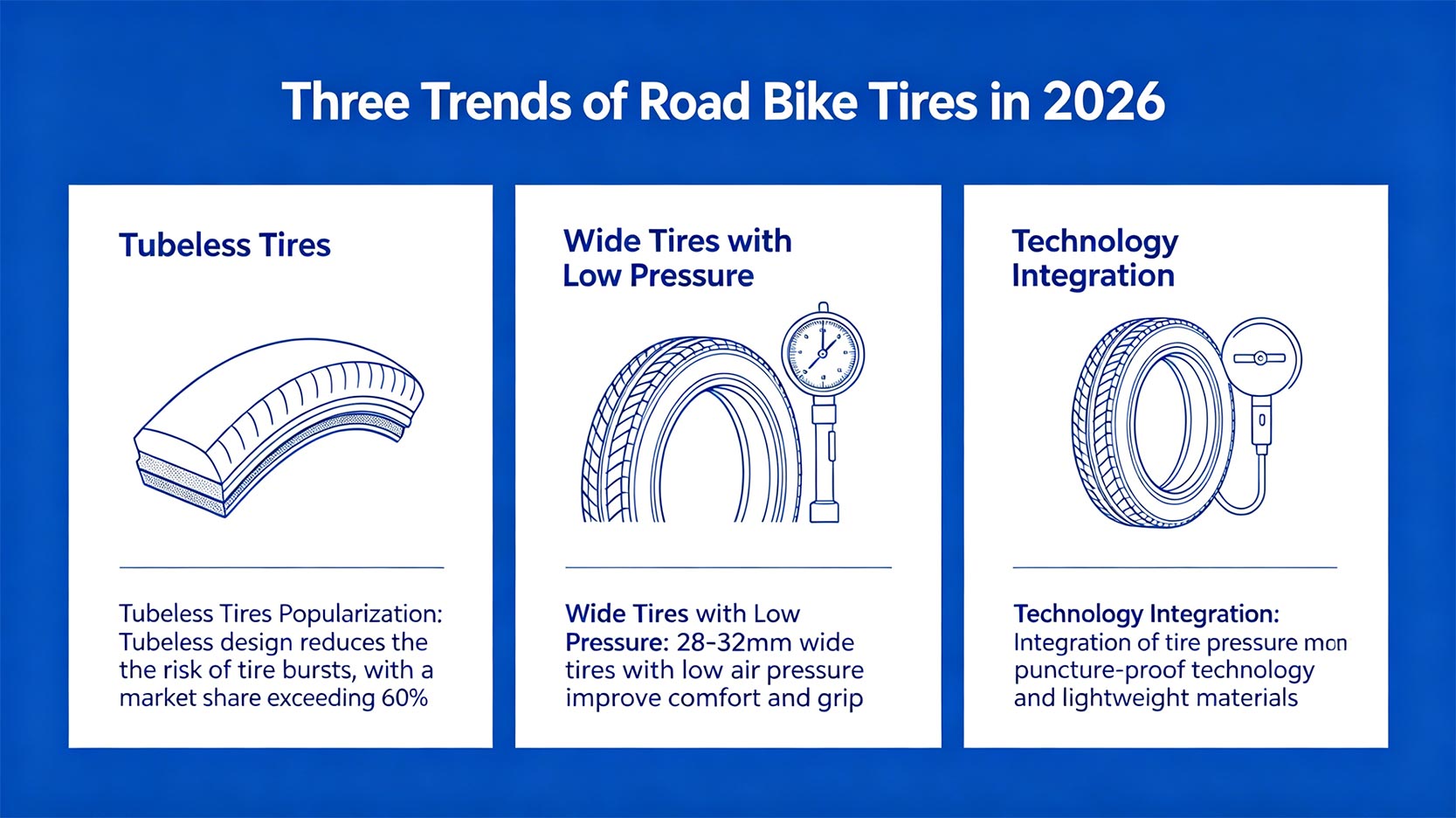
Major Industry Trends in 2026

Popularization of Tubeless TiresTubeless tires dominate the market for balanced safety, comfort and efficiency. Clincher tires serve basic daily use while tubular tires remain exclusive for elite racing.


Wide Tire & Low Pressure Becomes Standard Modern cycling favors wider tires running at lower pressure, bringing improved comfort, grip and aerodynamic efficiency.

Integrated Technical Optimization Tubeless tires combine the lightweight merit of tubular tires and easy maintenance of clincher tires, with constantly optimized accessories and affordable pricing.

Final Selection Tips

Extreme speed & professional racing → Tubular Tire

Daily use & budget preference → Clincher Tire

All-round comfort & safe long ride → Tubeless Tire

No one-size-fits-all perfect tire. Choose properly based on your riding demands.

Leave A Message

Leave A Message
If you are interested in our products and want to know more details,please leave a message here,we will reply you as soon as we can.
submit
Contact Us :sales@sakyacarbon.com

Home

products

WhatsApp

contact